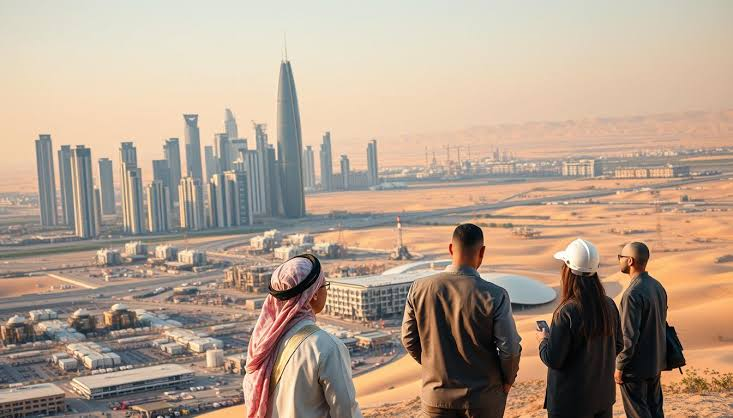
Why Qatar Is Emerging as One of the Top Destinations for Energy Professionals
There are few places in the world right now where a single country’s infrastructure ambitions are reshaping an entire global industry. Qatar is one of them. With a $50 billion-plus LNG expansion programme underway, a construction market worth over $30 billion, and a national development strategy that is actively pulling skilled talent from every corner of the globe, Qatar has quietly become one of the most compelling career destinations for energy professionals in 2025 and 2026. The question is no longer whether opportunities exist here they exist in extraordinary volume. The question is whether professionals understand the full picture: what is driving demand, what roles are available, how competitive the compensation is, and how to navigate the path into this market effectively.
The North Field Expansion: The Engine Behind Everything
To understand why Oil and Gas Jobs in Qatar are at a historic high, you need to understand the North Field. The North Field, shared with Iran, is the single largest natural gas reservoir in the world. Qatar is currently executing the largest LNG capacity expansion in the history of the energy industry a multi-phase programme that will lift national LNG output from 77 million tonnes per annum (MTPA) to 142 MTPA by 2030. The North Field East project alone was sanctioned at $28.75 billion, adding four new liquefaction trains to the 14 already operating at Ras Laffan. The North Field South project is now accelerating through its peak engineering and procurement phase.
The scale of this undertaking has created a talent demand that Qatar’s domestic workforce simply cannot meet alone. According to KiTalent’s Qatar Energy Sector analysis published in early 2026, the North Field East project reached 85% completion by end of 2024, with first production scheduled for late 2025 and the transition from construction to commissioning is now creating an entirely distinct wave of specialist hiring. Commissioning engineers, process safety specialists, quality assurance professionals, and project control experts are needed in high volume simultaneously with North Field South’s engineering peak. According to Gulf Talent’s Qatar Energy Sector Hiring Barometer, 43% of commissioning roles for the North Field East project remained unfilled after six months of active search a figure that illustrates the urgency and scale of the opportunity for qualified candidates.
Qatar’s energy sector plans to hire over 10,000 professionals by 2026, according to 2025 recruitment trend analyses. Over 5,000 direct Oil and Gas Jobs in Qatar are expected to emerge from LNG expansion projects and related fields between 2025 and 2026 alone. For petroleum engineers, process engineers, commissioning specialists, HSE leads, instrumentation professionals, and project managers with mega-project experience, the pipeline of openings is both deep and long-term.
Beyond LNG: The Breadth of Qatar’s Energy Hiring
It would be a mistake to think of Qatar’s energy hiring as limited to LNG. Qatar is increasing crude and condensate output by an estimated 19% between 2025 and 2030, largely through investment in the Al-Shaheen field and enhanced recovery at Dukhan. According to Orion Jobs’ 2025 energy hiring analysis, this is driving demand for QA/QC professionals, instrumentation engineers, and process engineers particularly focused on petrochemical and field development projects.
The energy sector employs over 100,000 professionals across upstream and downstream operations in Qatar, with expatriates forming the backbone of the engineering, maintenance, and operations workforce. According to a 2025 compensation guide by Labeeb, engineers and technical staff in Qatar’s energy sector typically earn between QAR 15,000 and QAR 25,000 per month tax-free, while supervisors and team leads command QAR 25,000 to QAR 35,000 per month with additional allowances for housing, education, and travel frequently increasing total compensation by a further 30 to 50%.
Major international EPC contractors including McDermott International, Technip Energies, Saipem, Tecnicas Reunidas, and Petrofac are all actively executing packages in Qatar, and all recruit internationally. Many expatriates working in Qatar’s oil and gas sector progress from QAR 18,000 entry-level roles to QAR 30,000+ positions within three to five years as they build project-specific expertise and institutional knowledge that is genuinely difficult to replace.
Why Skilled Construction Workers Are in Demand in Qatar
The energy story and the construction story in Qatar are inseparable. LNG trains, pipelines, processing facilities, export terminals, offshore platforms, and the broader infrastructure supporting Qatar’s energy ambitions all require a vast and skilled construction workforce. But the demand extends well beyond energy-related projects. Qatar’s National Vision 2030 is driving investment in smart cities, commercial real estate, transport infrastructure, healthcare facilities, and educational institutions at the same time as the energy mega-projects are at peak execution.
According to the Qatar Commercial Construction Market Report 2025, the commercial construction market alone is valued at over $30 billion. Major ongoing developments including Lusail City, Doha Metro expansion, smart city infrastructure, and highway construction programmes are creating continuous demand for civil engineers, MEP professionals, welders, crane operators, site supervisors, and construction foremen. According to Qatar Ministry of Finance projections cited by Nexdigm, infrastructure and construction projects are expected to create approximately 45,000 jobs through this development cycle.
The challenge that construction companies consistently face is the gap between the volume of workers available and the level of skill those workers possess. As noted in existing DSS research, the Qatar Chamber of Commerce has identified that around 30% of construction projects are experiencing delays due to insufficient skilled workers, particularly in specialised construction trades. Companies want workers with technical certifications, a working knowledge of safety procedures and technical drawings, and demonstrated experience in their discipline and such workers command better terms, greater job security, and real career progression. Skilled Construction Workers Are in Demand in Qatar precisely because this gap between supply and demand shows no sign of closing on its own.
What Makes Qatar Attractive Beyond the Salary
Compensation is compelling, but experienced professionals weigh far more than a monthly rate when considering a long-term relocation. On this broader measure, Qatar performs exceptionally well.
Qatar consistently ranks among the safest countries globally a significant consideration for professionals relocating with families. Doha offers world-class international schools, modern healthcare, and rapidly improving lifestyle infrastructure following the investments made during the FIFA World Cup 2022 preparation period. The job market in Qatar, according to QatarVisaQVC’s 2025 assessment, attracts professionals from Asia, Europe, and Africa precisely because it combines tax-free income, career growth, and long-term project stability in a way that few markets can match simultaneously.
Career progression is also genuinely structured, not theoretical. Qatar’s mega-projects are multi-phase by design: professionals who perform well on early phases are routinely retained for subsequent phases or transferred internally to new offshore packages, LNG trains, or brownfield expansion programmes. Qatar follows international best practices throughout its energy operations, which means experience gained on Qatar projects is globally transferable to Australia, the North Sea, Africa, and Southeast Asia. A long-term assignment in Qatar is not just a well-paid posting; it is a credential in itself.
Why Working with a Recruitment Agency in Qatar Makes All the Difference
For all of its opportunity, Qatar’s job market has layers of complexity that catch unprepared candidates off guard. Visa and work permit requirements, Iqama regulations, the nuances of different contractor and client structures, and the specific expectations of hiring managers at QatarEnergy, QatarGas, and the major EPC contractors are all factors that significantly affect application success.
This is where working with a specialist Recruitment Agency in Qatar transforms outcomes for candidates and employers alike. Dynamic Staffing Services has operated in the Gulf region for over 48 years, with a team of more than 315 professionals based across KSA, Dubai, Abu Dhabi, Qatar, the UK, India, and beyond. DSS doesn’t simply match CVs to job titles it provides end-to-end support, including pre-departure briefings, guidance on living and working in Qatar, post-arrival assistance with accommodation and banking, and ongoing support during the critical settling-in period. For employers navigating the compressed timelines of Qatar’s current expansion cycle, DSS provides access to a qualified, pre-screened candidate base across construction, oil and gas, engineering, healthcare, hospitality, and logistics.
The talent shortage in Qatar’s LNG commissioning and construction sectors is systemic, not cyclical. Specialist agencies with deep market knowledge and established employer relationships are the most reliable bridge between international talent and Qatar’s rapidly growing demand.
Roles in Highest Demand Right Now
For professionals evaluating whether Qatar is the right market for them, the roles attracting the most active hiring as of mid-2026 include: commissioning engineers and specialists across LNG train operations; HSE leads and safety engineers certified to NEBOSH or equivalent standards; process engineers with LNG or petrochemical backgrounds; project control engineers and project managers with mega-project experience; QA/QC professionals for both upstream and downstream operations; civil and structural engineers for infrastructure projects; MEP engineers for commercial and urban development; and site supervisors and construction foremen with demonstrable technical certifications and safety knowledge.
Candidates who demonstrate digital fluency experience with AI integration, IoT plant systems, or digital oilfield technologies are increasingly favoured by Qatar’s major energy operators as the sector integrates technology at every stage of operation.
Final Thoughts
Qatar’s combination of world-scale project ambition, tax-free compensation, long-term career progression, and genuine quality of life makes it one of the most attractive destinations for energy and construction professionals in the world today. The North Field expansion is not a short-term spike it is a decade-long programme with cascading hiring needs across engineering, operations, construction, and support functions. For professionals who position themselves correctly and seek guidance from experienced specialists, Qatar in 2025 and 2026 represents one of those rare convergences of timing, scale, and opportunity that defines careers.












Post Comment