How to Formulate a Dichotomous Question with Accompanying Instruction in Biology Classification
Biology classification is one of the most important foundations of understanding living organisms. Students learn how to group plants, animals, and microorganisms based on shared characteristics. One of the most effective tools used in this process is the dichotomous question. This method helps learners identify organisms step by step using simple yes-or-no choices that guide them toward accurate classification.
Formulating a dichotomous question with clear accompanying instruction is essential in education because it simplifies complex biological identification. Instead of memorizing long lists of characteristics, students can follow structured pathways that lead to correct answers. This approach improves critical thinking, observation skills, and scientific reasoning in a very practical way.
What Is a Dichotomous Question?
A dichotomous question is a type of question that provides only two possible answers, usually “yes” or “no.” In biology classification, these questions are arranged in pairs to help users gradually narrow down the identity of an organism. Each answer leads to another question until the correct classification is reached.
This method is widely used in taxonomy because it creates a logical pathway for identification. It removes confusion and helps learners focus on specific characteristics at each step. When properly structured, dichotomous questions make biological classification easier and more engaging for students.
What is the accompanying instruction?
Accompanying instruction refers to the clear guidance provided alongside dichotomous questions. It explains how to follow the sequence, how to interpret each answer, and how to move from one step to the next. Without proper instruction, learners may find the classification process confusing.
Good instructions ensure that students understand the purpose of each question and how to use the system effectively. In biology education, this clarity is important because it helps learners develop confidence while working through complex classification tasks.
Importance of Dichotomous Questions in Biology
Dichotomous questions play a major role in teaching biological classification. They allow students to break down large groups of organisms into smaller, more manageable categories. This step-by-step approach makes learning more structured and less overwhelming.
The importance of this method lies in its ability to simplify complex scientific information. Instead of memorizing hundreds of species, students can use logical decision-making to identify organisms based on observable traits.
Why Clear Instruction Matters
Clear instruction is essential when working with dichotomous questions because it ensures consistency in understanding. If students misinterpret a step, they may arrive at incorrect conclusions. Proper guidance prevents confusion and improves accuracy in classification tasks.
In biology classrooms, teachers often emphasize instructions to ensure that all learners follow the same process. This helps maintain fairness and improves the overall learning experience.
Basic Structure of Dichotomous Questions
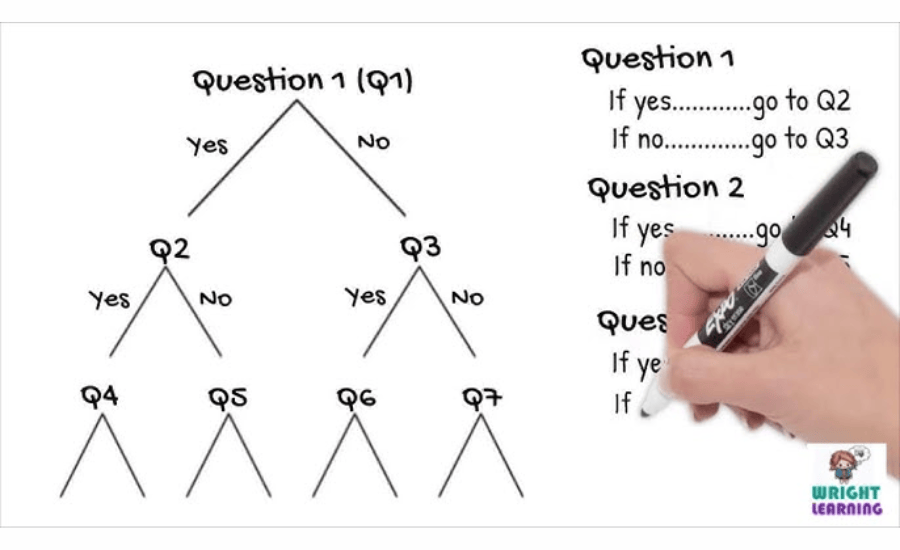
The structure of dichotomous questions is based on pairs of opposing statements. Each pair leads the learner to a new set of choices until the organism is identified. This branching system resembles a decision tree that narrows down possibilities step by step.
A well-designed structure ensures that each question is clear, specific, and based on observable characteristics. This makes the classification process logical and easy to follow.
Steps to Formulate a Dichotomous Question
Formulating a dichotomous question begins with identifying the subject or organism group. Once the subject is chosen, key characteristics are selected for comparison. These characteristics must be simple and observable.
The next step involves creating pairs of contrasting statements. Each pair should guide the learner toward the next stage of classification. The final structure should be logical, sequential, and easy to follow.
Choosing Relevant Biological Characteristics
Selecting the right characteristics is one of the most important parts of creating dichotomous questions. These characteristics should be visible, measurable, and easy to distinguish. Examples include shape, habitat, structure, or reproduction type.
Choosing irrelevant or complex traits can make the classification process confusing. Therefore, simplicity and clarity are essential when designing these questions.
Role of Observation in Classification
Observation is the foundation of biological classification. Students must carefully examine organisms to identify key features. These observations are then used to answer dichotomous questions accurately.
Strong observation skills help learners make better decisions and improve their understanding of biological diversity. This skill is developed through practice and guided learning.
How Dichotomous Keys Work
Dichotomous keys are tools that use a series of paired questions to identify organisms. Each answer leads to another question until the final identification is reached. This creates a structured pathway for classification.
These keys are widely used in biology because they simplify complex identification tasks. They are especially helpful when dealing with large groups of organisms.
Designing Effective Question Pairs
Effective question pairs must be clear and directly opposite in meaning. For example, a question may ask whether an organism has wings or does not have wings. Each option leads to a different path in the classification process.
This clarity guarantees that users won’t get lost while navigating the key.Proper design improves accuracy and learning outcomes.
Importance of Logical Sequencing
Logical sequencing ensures that each step in the dichotomous key flows naturally into the next. The questions must be arranged from general characteristics to more specific ones. This helps narrow down possibilities gradually.
Without proper sequencing, users may find the classification process confusing or inconsistent. A well-organized structure improves both usability and understanding.
Common Mistakes in Formulation
One common mistake in formulating dichotomous questions is using unclear or overlapping characteristics. This can lead to confusion and incorrect answers. Another mistake is skipping logical steps in the sequence.
Avoiding these errors requires careful planning and review. Educators often revise their questions to ensure clarity and accuracy before using them in classroom settings.
Improving Question Clarity
Clarity is essential in dichotomous question design. Each question should use simple language and focus on one characteristic at a time. Complex wording can confuse learners and reduce effectiveness.
Improving clarity also involves testing the questions with students to ensure they understand the instructions correctly. Feedback helps refine the structure and improve learning outcomes.
Role of Teachers in Instruction
Teachers play a key role in guiding students through dichotomous classification. They explain how to follow instructions, interpret questions, and make correct choices. Their support helps students build confidence.
In classroom settings, teachers often demonstrate examples before allowing students to practice independently. This guided approach improves understanding and retention.
Student Challenges in Learning
Students may face challenges when first learning how to use dichotomous questions. They may struggle with interpreting characteristics or following the correct sequence. These difficulties are common in early learning stages.
With practice and clear instruction, most students gradually improve. Repetition and hands-on exercises help build stronger classification skills.
Practical Applications in Biology
Dichotomous questions are widely used in real biological research and education. Scientists use them to identify unknown species in the field. Students use them in laboratories and classroom exercises.
This practical application helps learners connect theoretical knowledge with real-world biology. It makes learning more engaging and meaningful.
Technology and Modern Classification Tools
Modern technology has introduced digital tools that support dichotomous classification. Interactive software and mobile applications now allow students to explore biological keys more easily. These tools often include visual aids and step-by-step guidance.
Technology enhances learning by making classification more interactive and accessible. It also helps students practice independently outside the classroom.
Read More: Ronald Leyser
Importance of Practice in Mastery
Regular practice is essential for mastering dichotomous questions. The more students engage with classification exercises, the more confident they become. Practice helps reinforce logical thinking and observation skills.
Over time, students develop the ability to quickly identify organisms based on key characteristics. This improves both accuracy and speed in classification tasks.
Conclusion
Formulating a dichotomous question with accompanying instruction is an important skill in biology education. It helps simplify complex classification processes and encourages structured thinking. When designed properly, it provides a clear and logical pathway for identifying organisms.
By focusing on clarity, observation, and logical sequencing, educators can create effective learning tools that enhance student understanding. As technology continues to evolve, dichotomous classification methods will remain a valuable part of biology learning, supporting both traditional and modern educational approaches.













Post Comment