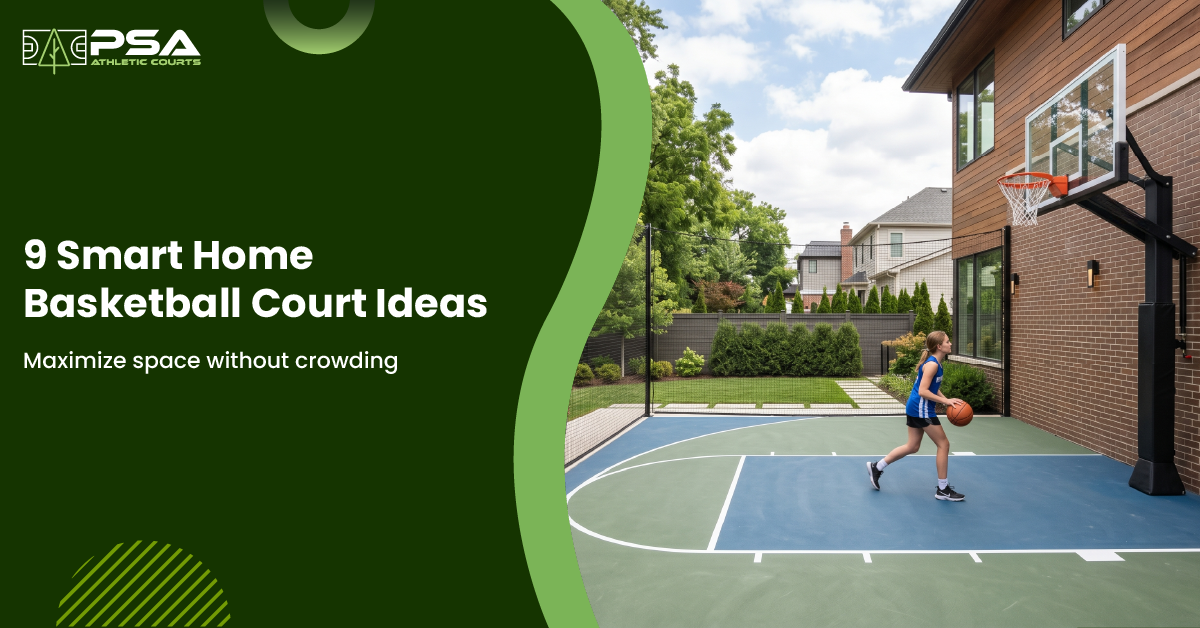
9 Ways to Fit a Home Basketball Court Without Making Your Yard Feel Crowded
Adding a basketball court at home is one of the best ways to create a functional recreational space for families, athletes, and homeowners who enjoy sports. However, many people assume they need a massive backyard to make it work.
In reality, smart planning and proper court design can help you build a functional home basketball court without overwhelming your outdoor space. The key is understanding layout optimization, court dimensions, and surface planning before construction begins.
Whether you want a compact shooting area or a full recreational setup, these nine tips will help maximize your yard while maintaining an open and visually balanced property.
1. Choose the Right Court Size for Your Property
Not every home needs a full-size court.
Many residential courts successfully use:
- Half-court layouts
- Shooting courts
- Practice zones
- Multi-use sports spaces
Understanding home basketball court dimensions helps property owners select a layout that fits naturally within the available yard space.
For example:
- Full court: 94 × 50 feet
- Half court: 47 × 50 feet
- Compact recreational courts: customizable smaller layouts
Smaller layouts often provide the best balance between playability and efficient space usage.
2. Use Multi-Purpose Court Designs
One of the best space-saving strategies is creating a court that serves multiple purposes.
Popular options include:
- Basketball + pickleball combination courts
- Recreational play areas
- Driveway-integrated courts
Multi-purpose surfaces reduce the amount of dedicated space needed while increasing overall functionality.
Professional planning ensures the layout remains visually clean and organized.
3. Position the Court Strategically
Court placement affects how large your yard feels visually.
Positioning the court:
- Along property edges
- Near fences
- Parallel to landscaping features
helps preserve open green space in the center of the yard.
This creates a more balanced outdoor environment while maximizing functionality.
4. Use Space-Efficient Surfacing Materials
Modern court materials allow homeowners to reduce visual bulk while improving durability.
Popular options include:
- Acrylic-coated asphalt
- Modular sports tiles
- Concrete with color coatings
Professional basketball court home installation specialists often recommend surface systems that blend naturally with residential landscapes.
According to experienced court specialists such as Pine State Courts, choosing the right surface color and texture can make a court feel less intrusive within smaller residential properties.
5. Reduce Unnecessary Border Space
Many oversized courts waste space with excessive sidelines or unused areas.
Efficient layouts prioritize:
- Essential clearance zones
- Safe movement areas
- Compact fencing designs
Reducing unnecessary spacing keeps the yard functional without sacrificing safety.
6. Incorporate Landscaping Around the Court
Strategic landscaping softens the appearance of the court.
Popular options include:
- Trees and shrubs around fencing
- Decorative borders
- Privacy landscaping
These additions help the court integrate naturally into the property design instead of dominating the yard visually.
7. Choose Adjustable Basketball Systems
Portable or adjustable hoops offer flexibility in smaller yards.
Benefits include:
- Easier court integration
- Better multi-use functionality
- Reduced permanent visual impact
This approach works especially well for recreational family courts.
8. Plan Efficient Lighting Solutions
Oversized lighting systems can make residential courts feel commercial and crowded.
Modern LED systems provide:
- Compact pole designs
- Directional lighting
- Lower visual impact
Proper lighting placement improves usability while maintaining a clean backyard appearance.
9. Work with Professional Court Designers
The biggest mistake homeowners make is trying to estimate layouts without professional guidance.
Experienced designers help optimize:
- Court orientation
- Space efficiency
- Drainage systems
- Surface dimensions
Reviewing professional resources such as complete basketball court dimensions guides and backyard basketball court size planning guides helps property owners better understand realistic layout options.
For homeowners planning residential courts, experienced teams like Pine State Courts provide customized designs that maximize playability while preserving outdoor living space.
Why Smart Space Planning Matters
Poorly planned residential courts often create:
- Overcrowded yards
- Drainage issues
- Limited landscaping flexibility
- Reduced property aesthetics
Professional planning ensures the court complements the property instead of overpowering it.
Final Thoughts
A home basketball court does not require an oversized property to be successful. With proper planning, efficient layouts, and modern surface systems, homeowners can create functional courts while maintaining an open and visually appealing yard.
By following these nine strategies, property owners can maximize recreational value without sacrificing comfort, aesthetics, or outdoor usability.










Post Comment